


Images, texts, and artistic explorations on humanity, technology, and the environment
Current exhibition: Beyond Intelligence
Artistic Explorations and Image-Making Techniques
This section gathers image-making techniques born from artistic experiments with form, structure, materiality, and artificial intelligence tools.
It is not merely a gallery of finished works, but a record of the creative path: how a visual language begins to take shape, how it shifts, deepens, becomes more precise, and gradually finds its way into the digital image.
This section is still being developed and will be expanded gradually.
Nested Plates
Nested Plates Technique is a visual construction method in which forms are built from elongated, layered modules. Each larger plate contains a smaller inner plate, and within it an even finer strip of light, color, texture, or data.
The technique is not used as surface decoration; it becomes the structural logic of the image, shaping figures, faces, architecture, landscapes, plants, light flows, and atmospheric forms.
Organic Mosaic Architecture
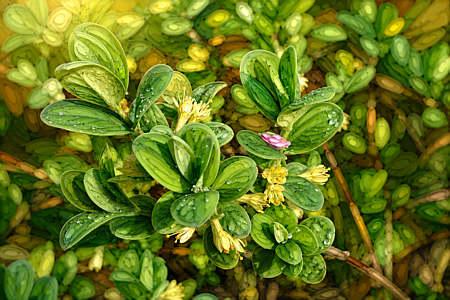
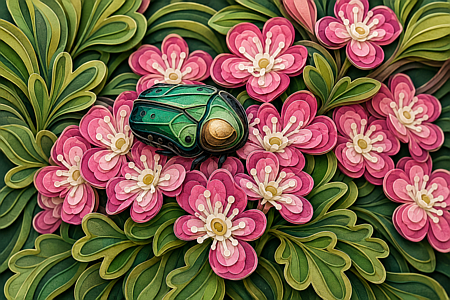
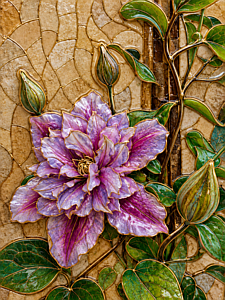
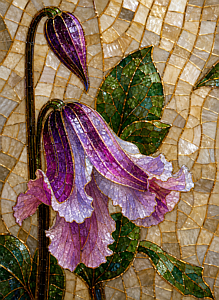
Organic Mosaic Architecture is an image-making technique that transforms natural, architectural or figurative forms into flowing, mosaic-like structures. The image is not simply covered with ornament: its shapes are rebuilt as if they had grown from curved ceramic, mineral and stained-glass fragments.
Glazed Mosaic
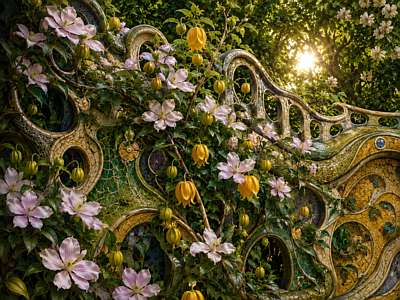
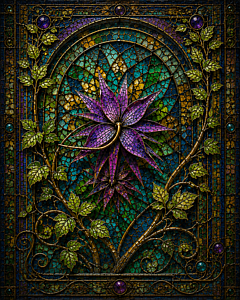
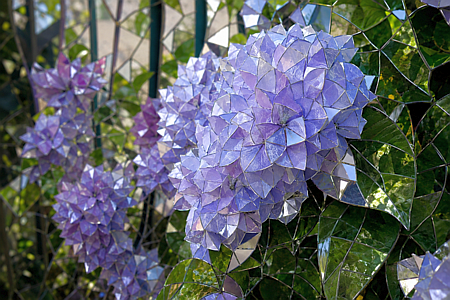
Glazed Mosaic is a more material-focused branch of Organic Mosaic Architecture. Here the image is shaped through glossy ceramic surfaces, enamel-like shine and raised mosaic fragments. The visual emphasis shifts from architecture and structure toward tactile surface, light reflection and jewel-like material depth.
Fractal Interface
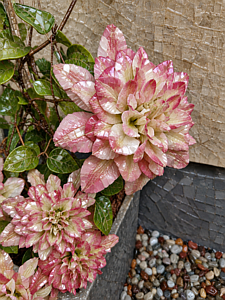
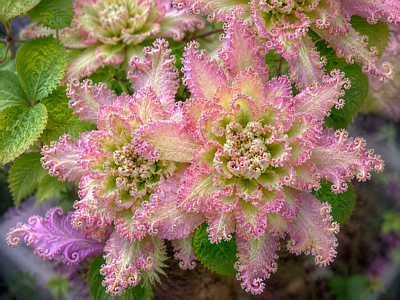
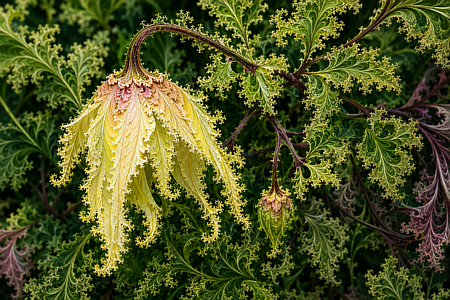
Fractal Interface Technique is a visual transformation method in which the edges, colour transitions and structural boundaries of a subject are rebuilt as recursive, fractal-like systems. The main form remains recognizable, but its contours, veins and transitional zones begin to branch, curl, split and repeat at decreasing scales. The technique does not place fractals on top of the image; it makes the image grow through fractal logic.
Mirror-Fragment Reconstruction
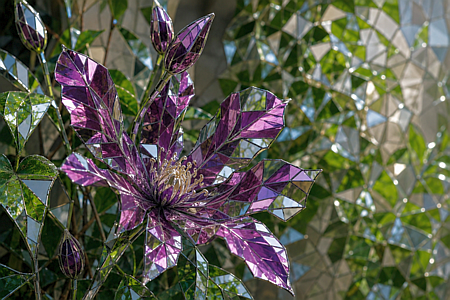
Mirror-Fragment Reconstruction is an image-creation technique in which the subject is not merely covered with a mirror-like surface, but visually rebuilt from reflective fragments. Each petal, leaf, figure, object, or background area is reconstructed through embedded mirrored segments that follow the natural anatomy, rhythm, and color structure of the original form.
Drop Dispersion
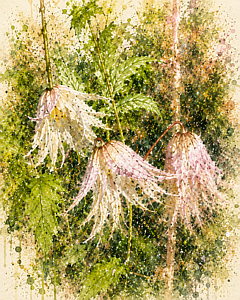
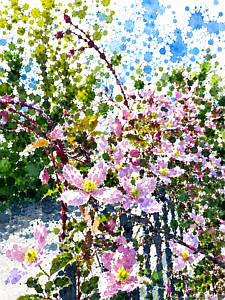
Drop Dispersion Technique is a structural image-creation method based on the visual logic of a droplet striking a surface and dispersing into fragments. Each form is built from larger central drop marks, smaller surrounding splashes, and occasional thin organic connections between them. The image is not merely covered with a splatter effect; rather, its shapes, contours, tonal transitions, and movement are constructed from dispersed droplet structures.
Photography
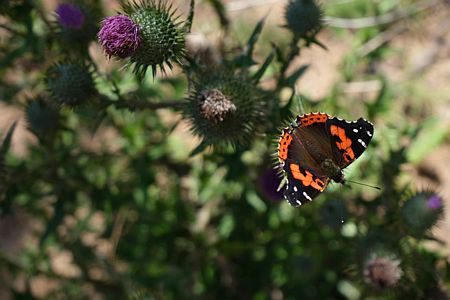
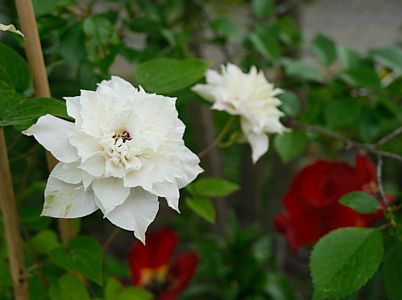
This section will present photographs of living nature — plants, blossoms, insects, and other small details of the surrounding world. It is not only an act of observing nature, but also a search for forms, colours, light, and textures from which new artistic explorations may later emerge.
This section is still being developed and will be expanded over time.